Workplace Violence Prevention Plan and Dental Staff Hiring Retention Essentials
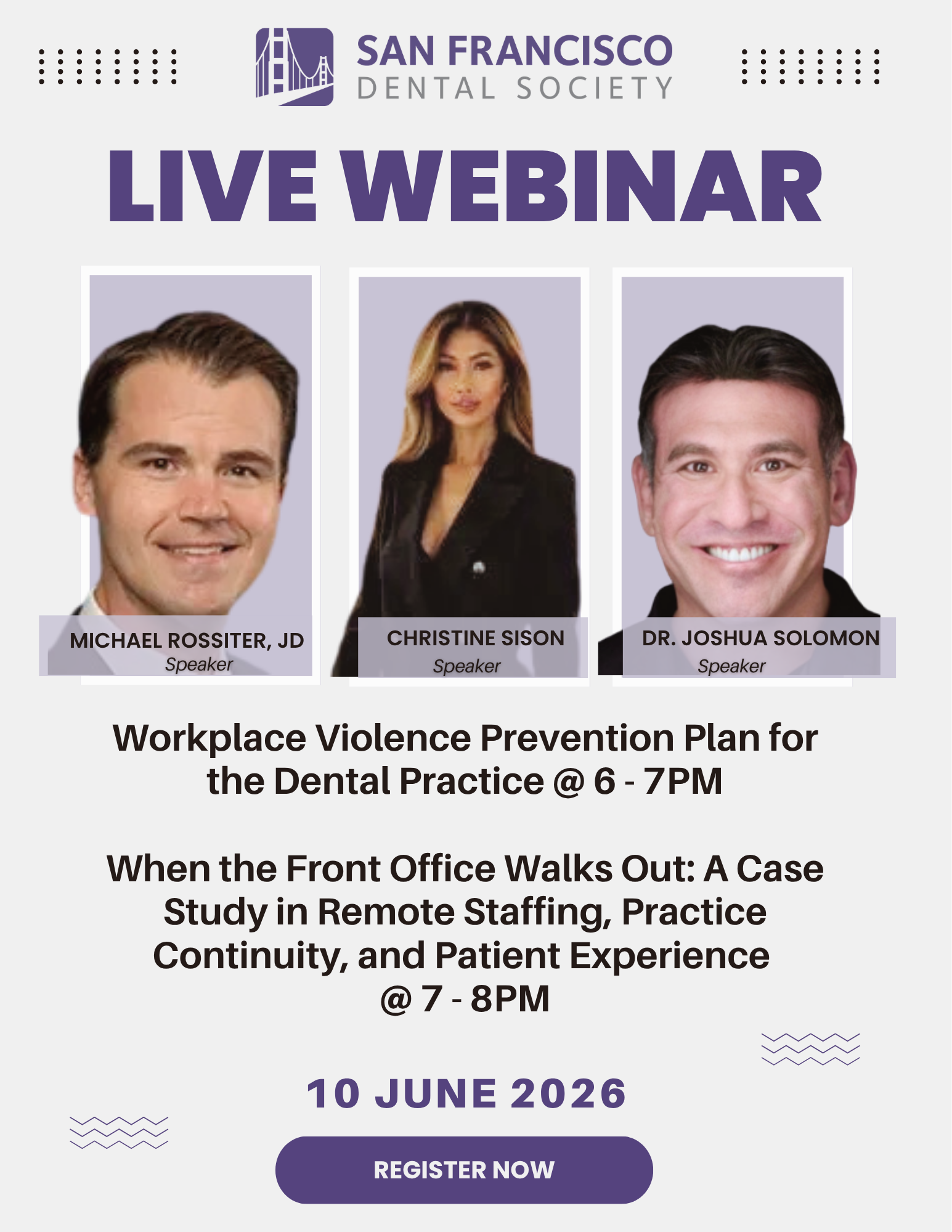
Implementing a Workers Violence Prevention Plan for the Dental Practice
6pm-7pm PST 1 CEU corePresenter: Michael Rossiter, Attorney/Partner, Scott & Whitehead
This course equips dental professionals with a clear understanding of the fundamental requirements of California’s new Workplace Violence Prevention law. Participants will learn what is required to create and implement a comprehensive Workplace Violence Prevention Plan (WVPP) tailored to the unique challenges of dental practices.
The program will also cover best practices under California law to ensure compliance with the Cal/OSHA workplace violence prevention standard and maintain a safe environment for employees and patients.
Learning Objectives:• Understand the legal requirements for workplace violence prevention under California law and Cal/OSHA standards.
• Identify potential risks and warning signs of workplace violence specific to dental practices.
• The importance of developing and implementing an effective Workplace Violence Prevention Plan (WVPP).
• Learn best practices for responding to workplace violence incidents, including reporting and follow-up procedures.
When the Front Office Walks Out: A Case Study in Remote Staffing, Practice Continuity and Patient Experience
7pm-8pm PST 1 CEU 20%Presenter: Christine Sison & Dr. Joshua Solomon
Front office turnover can disrupt a dental practice leading to missed calls, delayed follow-up, frustrated patients, and lost production. In this course, Dr. Josh Solomon shares how his practice restored stability after staffing challenges by implementing a remote front office model.
Participants will learn what worked, what didn’t, and how remote administrative support can be structured. Topics include responsibilities suitable for remote roles, maintaining accountability, communication, HIPAA awareness, and addressing concerns around team buy-in, workflow integration, and patient satisfaction.
This session offers a practical, peer-led perspective on using remote staffing to improve continuity, reduce administrative strain, and enhance the patient experience.
Course Objectives:By the end of this course, participants will be able to:
- Identify the operational impact of front office turnover on scheduling, patient communication, insurance workflows, billing follow-up, team morale, and practice continuity.
- Evaluate which front office responsibilities may be appropriate for remote administrative support, including scheduling, insurance verification, patient communication, billing support, and administrative follow-up.
- Describe key HR considerations for hiring, onboarding, and managing remote front office team members, including communication skills, accountability, HIPAA awareness, technology comfort, and performance expectations.
- Apply practical strategies for integrating remote staff into existing practice workflows, including communication systems, task handoffs, escalation protocols, documentation, and team alignment.
- Discuss how remote front office support can affect patient experience and satisfaction, including responsiveness, personalization, trust, continuity, and quality of communication.
- Cancellations of registration must be made by June 1, 2026 in order to receive a refund, less a $10.00 processing/handling fee
- Cancellations after June 1, 2026, or No Shows, will NOT receive a refund.